Thursday, May 18

Let's Eat Part 1: Food Culture

, , 6


Food is an integral part of understanding a culture. The next few lessons are dedicated to eating. We will focus mainly on mealtimes, names, ordering food and other common phrases you should expect to hear in relation to eating.

First, we will start off with a translation exercise. See if you can follow the conversation.


Jacobo: Nangankan?
Mark: Saan pay.
Jacobo: Umayka ditoy, mangan ka pay.

Mark: Ania ti sidain?
Jacobo: Pinakbet, innapoy, ken sisig.
Mark: Kayat ko ti sisig.

Mark: Naimas. Sino ti nagluto?
Jacobo: Kasinsin ko nga ni Demy.
Mark: Naimas ti sidain.

Mark: Nabusugakon.


So how much of that did you understand? Well, check yourself.


Jacobo: Nangankan? Did you eat yet?
Mark: Saan pay. Not yet.
Jacobo: Umayka ditoy, mangan ka pay. Come here and eat.

Mark: Ania ti sidain? What is the side dish?
Jacobo: Pinakbet, innapoy, ken sisig. Pinakbet, Rice, and Sisig
Mark: Kayat ko ti sisig. I want Sisig.

Mark: Naimas. Sino ti nagluto? Yummy. Who cooked?
Jacobo: Kasinsin ko nga ni Demy. My cousin Demy
Mark: Naimas ti sidain.The side dish is yummy

Mark: Nabusugakon.I'm full.

Nangankayon? ( Nah-ngahn-kah-yon?)
Nangankan? (Nah-ngahn-kahn?)


Simply put "Have you eaten?" or as we like to say in Texas, "Have y'all eaten?". 

Filipino culture dictates that it is rude to not offer someone food, so it is customary to ask this question when you have visitors. So if you are the visitor, to avoid an embarrassing situation where food is not prepared ahead of time, it is best to answer that you have already eaten.


Wen, nanganakkon (wen, nah-ngah-nahk-con) 
Yes, I have eaten.

Wen, nangankamin (wen, nah-ngahn-kah-mean) 
Yes, we have eaten.


If it is a sincere question, you will mostly like be asked again, in which case it is okay to accept. In which you can respond with the following:


Saan pay (sah-un pie)  - Not Yet
or
Merienda lang (Mer-ree-yen-duh lung) - Snacks only


And always follow with the proper title:

Apo (elderly)
Uncle/Auntie (if they are old enough to be your auntie/uncle, you call them that)
Manang/manong (someone older)
Ading (someone younger)
Madam/Sir (Politicians, Teachers, businessman)
Lolo/Lola 

And of course, when you are done, don't forget to be thankful.

Agyamanak (ugh-yah-man-knock) - singular

Agyaman kami (ugh-yah-man-kah-mee) - plural

So next time you have to visit someone or meet up with someone, remember this simple visiting etiquette. So next week we will discuss mealtime conversations.

Inton maminsan manen,
Siak ni Gigi


NOTES: These lessons are designed with the English Speakers in mind. The pronunciation is spelled out to emphasize sounds of the English language and alphabet to help the person to say it correctly in sounds that they are familiar with. 


For Tagalog/Filipino readers seeking to utilize our lessons, read the words in your native tongue and do not follow the suggested pronunciation.

Thursday, May 11

Top 10 Must-Try Ilokano Food

, , , 2


Our next lesson post topic is food. So let's talk about Ilokano food culture for a bit. Filipino's are fond of gatherings around food and if you are going to be around for the parties, you'll need to know what you are eating, right? So here are our top 10 Ilokano dishes.


Top 10 Ilokano dishes


1. Bagnet - The King of all lechons. Bagnet is a slap of Pork belly literally deep fried in its own fat, over and over to crispy perfected meaty chicharron. Then it is cut into manageable bite size pieces before taking its final dip into the boiler oil bath. They are served with spicy vinegar. It is artery clogging awesome!

Photo Courtesy of blissfulguro.com during her Vigan Food Trip.

2. Pinakbet - Veggie Delight of the North. It is a combination of vegetables cooked in bagoong (fish sauce). Bagnet is a perfect addition to this dish but some prefer to put shrimp. I used to wonder why my mom always has bittermelon, eggplant, okra, kabocha squash, and long beans in her garden. I just thought it was the basic Asian garden selection. Later on, I realized those are all the veggies to cook pinakbet! Now I get it!

Photo Courtesy of Kusina Master Recipes


3. Poki-Poki/ Poqui-Poqui - Grilled Eggplant Salad. Much like Tortang Talong except it has eggs and onions. Eggplants are grilled until the skin puff out then the toasty skin is removed. Then the mashed eggplants are pan-fried with scrambled eggs, onions and diced tomatoes. Eat dipped in soy sauce or fish sauce.

Photo Courtesy of blissfulguro.com during her Vigan Food Trip.

4. Dinardaraan - Chocolate Meat Pudding. Oh yum! that sounds good, it has chocolate and meat you say? Well, this delicious meat dish is basically sauteed pork meat cooked pork blood with vinegar added to it. The consistency and color after cooking look like chocolate, hence the name. For the most part, this dish is actually pretty good and no shouldn't have any surprise flavors.

Photo Courtesy of Get Lost to Ilocos

5. Dinakdakan - Ilokano Version of Sisig. Another Pork Goodness! So you boil a head of a pig and harvest everything except the bones from it. That includes the nose, ears, cheeks, and don't forget the brains. Some add pork belly, torched thinly sliced pork skin to the mix. Sometimes thrown into the grill for some crispiness. And sometimes, it's simply marinated in vinegar and calamansi and seasoned with onions, garlic, and salt. Either way, it's a totally awesome dish. Not convince? Well, it's the ultimate beer food. Maybe that will entice you to try. There's also beef and goat dinakdakan.

Photo Courtesy of  overseaspinoycooking.net.


6. Pinapaitan - Bitter but Famous. Pinapaitan stems from the word "Pait," which means bitter. That doesn't sound appetizing at all. Have you heard of Mexican Menudo?  Yup, it's pretty much the same soup dish. The difference is in the seasoning. Pinapaitan is an Ilokano soup dish that is mostly made with cow or goat innards and seasoned in its bile extract. First time trying it, go for the beef pinapaitan before you attempt the goat one unless you like goat meat.

Photo Courtesy of Roy Varagan of MAKAN

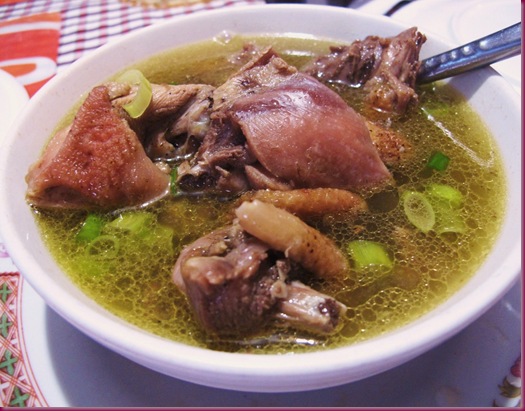
7. Pinikpikan - Igorot Delicacy. This is a chicken soup dish that is best made with "native" chicken or a mountain/wild chicken. The native chicken has long since been domesticated but still, it just tastes different. They have a darker meat and gamier taste. The feathers of the chicken are roasted off over open fire leaving the skin a bit torched but flavorful. It's cook for a long time to tenderize the meat and seasoned with ginger and fish sauce. Some add papaya or pepper leaves to have a bit of veggie option.

Photo Courtesy of Eat Eplore Experience.

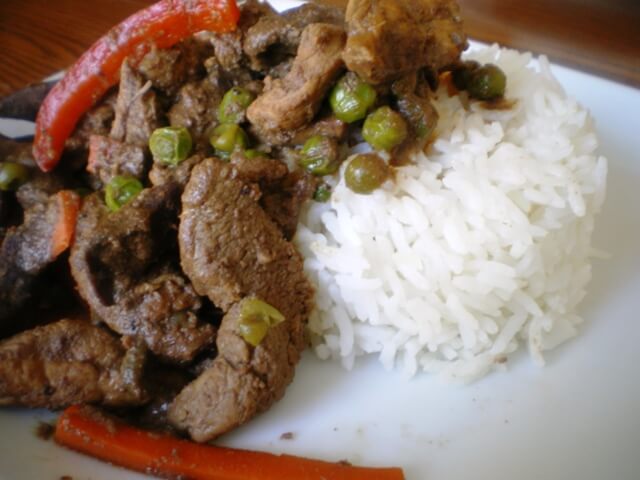
8. Igado - Just another innards dish. Igado is a popular Ilokano dish that mostly made of liver, meat strips and sometimes other organ parts. The name comes from the Spanish word "Higado," which translate to "liver." Hence the part where it has to have liver in the ingredients. It's cooked with bell pepper, peas, and carrots.

Photo Courtesy of PanlasangPinoy.com


9. Dinengdeng - Refreshing Bean Soup dish. This soup is made with variety of green veggies cook with bagoong (fish sauce) and serve with grilled or fried fish like galunggong (roundscad), tilapia or bangus (milkfish)

Photo Courtesy of  Angsarap.net

10. Ilocos Empanada - Not your normal empanada. These empanadas are orange! They mix achuete/annatto powder into their batter flour for flavor and color. The filling consist of shredded papaya or beans sprout with eggs and sometimes longganisa sausage. They are deep fried and dipped in spicy vinegar. Aside from it being deep-fried, it's totally healthy.

Photo Courtesy of Traveler on Foot

So there you go. I hope I made you hungry because I'm feeling hungry now that I'm done with this post.

Mapannak pay agbirok iti lutuik. (I'm going to go look for something to cook)

Inton maminsan manen ( Until Next Time)

SIAK NI GIGI

Thursday, May 4

Ilokano Weather Part 2: How to say COLD in Ilokano

, , , , , 1


COLD! COLDER! COLDEST!


 I think the chance for cold weather in my area is pretty much gone. Last week, our topic was all about the HOTNESS. Summer is approaching after all. And in the Philippines, it's hot most of the time. But there are occasions when you experience cold. 

So for this week's lesson, we are talking about COLD weather and feeling cold in general. I'll leave this vocabulary chart up here for reference. The concept is to use different words in the sentences below. 

Basic Vocabulary Chart

WEATHER TALK VOCABULARY
EnglishTagalogIlokano/IlocanoPronounce like this
HotMainitNapudot, NabaraNah-poo-doot, nah-bah-rah
ColdMalamigNalamek/NalamiisNah-lam-ehk/Nah-lam-mi-is
WetBasaBasaBah-sah
DryTuyoRagangirangRah-gah-ngee-rung
Humid/humidityPagkabasaNasalimuotNah-sah-lee-moo-ot
RainUlanTudotoo-do
SnowNiebeNiebeNee -e-be
IceYeloYeloYe-loh
StormBagyoBagioBug-yo


Tell me how COLD it is...


Lamek = COLD

Nalamek - It's cold
Nalamameken - It's already cold
Naglamek - It's very cold
Nalamlamek - It's colder (use for comparison)
Lumamek - It's going to become cold
Limamek - It became cold

Another word for Cold?

Nalamiis is another word for COLD.

Nalamiis - It's cold
Nalamiisen- It's already cold
Naglamiis- It's very cold
Nalamlamiis - It's colder (use for comparison)
Lumamiis- It's going to become cold
Limamiis - It became cold


Talking about the Weather

There is the translation following the English script and there is what English speaker would call the "backward way." Haha, well, it's actually called the reverse translation. English grammar is different from other languages.

The snow is cold ( rain = tudo, ice = yelo, food = makan)

Ti niebe ket nalamek (Tee nee-ye-beh ket nah-lahm-ehk)
Ti niebe ket nalamiis (Tee nee-ye-beh ket nah-lahm-mi-is)

The more common way to say it...

Nalamek iti niebe (Nah-lahm-ehk ee-tee nee-ye-beh)
Nalamiis iti niebe (Nah-lahm-mi-is ee-tee nee-ye-beh)
* It literally translates to ..... Cold is the snow. The verb or adjective comes before the noun.

Then there are descriptive nouns

Nalamek nga niebe (Nah-lahm-ehk tee nee-ye-beh)
Nalamiis nga niebe (Nah-lahm-mi-is tee nee-ye-beh)
*This translate to....Cold snow. When you have an adjective before a noun, you add NGA in between the words in Ilokano.

So for our lessons, we will mostly use reverse translation.

It's cold right now 

Nalamek tatta  (Nah-lahm-ehk tat-tah)
Nalamiis tatta (Nah-lahm-mi-is tat-tah)


It's already cold 

Nalameken (Nah-lahm-eh-ken)
Nalamiisen (Nah-lahm-mi-is-sen)


It's very cold today 

Naglamek tatta nga aldaw (Nug-lahm-ehk tat-tah ngah al-dao)
Naglamiis tatta nga aldaw (Nug-lahm-mi-is tat-tah ngah al-dao)
* When you want to emphasize an adjective, you use NAG instead of  NA before the adjective word. 


It's colder today

Nalamlamek tatta nga aldaw (nah-lahm-lahm-ehk tat-tah ngah al-dao)
Nalamiis tatta nga aldaw (nah-lahm-lahm-mi-is tat-tah ngah al-dao)


Wait for the climate to get cold

Urayem nga lumamek iti tiempo (Ooh-rah-yem ngah loo-mum-ehk ee-tee tee-yem-po)
Urayem nga lumamiis iti tiempo (Ooh-rah-yem ngah loo-mum-mi-is ee-tee tee-yem-po)


The climate became cold

Limamek iti tiempo ( Lee-mum-ehk ee-tee tee-yem-po)
Limamiis iti tiempo ( Lee-mum-mi-is ee-tee tee-yem-po)


I'm  cold/I'm very cold

Nalamekak/Naglamekak (Nah-lahm-ehk-ahk / Nug-lahm-ehk-ahk)
Nahlamiisak/Naglamiisak (Nah-lahm-mi-is-ahk /  Nug-lahm-mi-is-ahk)


You're cold/You're very cold 

Nalamek ka / Naglamek ka ((Nah-lahm-ehk-ka / Nug-lahm-ehk-ka)
Nalamiis ka/Naglamiis ka (Nah-lahm-mi-is ka /  Nug-lahm-mi-is ka)


I'm feeling cold 

Naglamek iti riknak - (Nug-lahm-ehk-ahk ee-tee reek-nak)
Naglamiis iti riknak - (Nug-lahm-mi-is-ahk ee-tee reek-nak)

Or you can say.....

Malamlamekak (Mah-lahm-lahm-ehk-ahk)
Malamiisanak ( Mah-poo-doo-tan-ack)


I'm going to cool off /cool down

Mapannak agpalamek - (Mah-pun-nak ugh-pah-lahm-ehk)
Mapannak agpalamiis - ( Mah-pun-nak ugh-pah-lahm-mi-is)


Nalamek and Nalamiis. If you get these two words mix up, it's okay. They literally mean the same thing. You can use them whether you're talking about the weather or how you are feeling.


COLD FOOD

The Halo-Halo is cold.
Ti Halo-halo ket nalamek/nalamiis.
*English grammar translation.

Cold is the Halo-Halo.
Nalamek/Nalamiis ti Halo-halo
*Reverse Translation. 

You will hear it both ways when the sentence format is:

The (Noun) is (adjective).

When you have an adjective before a noun, you add NGA in between the words in Ilokano

Nalamek/Nalamiis nga Halo-halo (Cold Halo-Halo)
Nalamek/Nalamiis nga Danum (Cold Water)
Nalamek/Nalamiis nga serbesa (Cold Beer)


Intayon agpalamiis. Inton Maninsan Manen!

(Let's go cool off. Until Next Time Again!)


Siak ni Gigi


NOTES: These lessons are designed with the English Speakers in mind. The pronunciation is spelled out to emphasize sounds of the English language and alphabet to help the person to say it correctly in sounds that they are familiar with. 

For Tagalog/Filipino readers seeking to utilize our lessons, read the words in your native tongue and do not follow the suggested pronunciation.

Thursday, April 13

The Lord's Prayer in Ilokano

, , , , 13


At a young age, I learned the Lords Prayer in Ilokano first then I learned it in English. A common prayer that is a lot of time taken for granted , The Lord's Prayer is not only spiritual but it is a helpful tool in learning the Ilokano language. Many of you already know this prayer in English/Tagalog by heart so it'll be easier for you to translate in your head as you read the Ilokano version.


The Lord's Prayer
"Amami"
(Ilokano Version)

Amami, nga adda sadi langit,
(Um-mah-mi  ngah  ad-dah  sah-dee  lah-ngeet)

Madaydayaw kuma ti Nagan mo.
(Ma-die-die-yao  koo-mah  tee  Na-gun moh)

Umay Kuma ti pagariam.
(Oo-my  koo-ma  tee  pah-gaar-yum)

Maaramid kuma ti pagayatam
(Mah-ah-rah-meed  koo-mah  tee  pah-gah-yah-tum)

Kas sadi langit kasta met ditoy daga.
(Kas  sah-dee  la-ngeet  met  dee-toi  dah-gah)


Itedmo kadakam ita ti kanenmi iti inaldaw.
(Ee-ted-moh kah-dah-kum ee-tah tee kah-nen-mee ee-tee ee-nal-dao)

Ket pakawanennakami kadagiti basol mi,
(Ket  pah-kah-wah-nen-nah-kum-mee  kah-dah-gee-tee  bah-sool  mee)

A kas met panamakawanmi kadagiti naka basol kadakami.
(Ah  kas  met  pah-nah-mah-kah-wun-mee  kah-dah-gee-tee nah-kah  bah-sool  kah-dah-kum-mee)

Ket dinakam iyeg iti pannakasulisog,
(Ket  dee-nah-kum  ee-yeg  ee-tee  pun-nah-ka-soo-lee-soog)

No di ket isalakannakami iti dakes.
(Noh  dee  ket  ee-sah-la-kun-nah-kum-mee ee-tee dah-kes)


Iti pagariam, iti Panakabalinmo, ken iti gloriam
(Ee-tee  pah-gaar-yum,  ee-tee  pah-nah-kah-bah-leen-moh, ken  ee-tee glor-ryam)
nga awan patinggana
(ngah ah-wun pah-teeng-gah-nah
Amen


And this is how it will translate in English, which is different from the English version of the Lord's Prayer.

Our Father who is in heaven,
May your name be honored
May your kingdom be ours
Your will be done,
Here on earth like it is in heaven
Give us now what we will eat everyday
And forgive us of our sins
as we forgive those who sin against us
Do not allow us into temptation
And deliver us from all evil
Because your is the kingdom,
The power and the Glory
that has no limit
Amen

Of course, 
here is the English version most people are familiar with.

Our Father, thou art in heaven,
Hallowed be thy Name. 
Thy kingdom come.
Thy will be done on earth,
As it is in heaven.
Give us this day our daily bread.
And forgive us our trespasses,
As we forgive them that trespass against us.
And lead us not to temptation,
But deliver us from Evil.

For thine is the kingdom,
The power and the glory 
Forever and Ever.
Amen.


Happy Easter Everyone!


Inton maninsan manen! Until Next Time Again.

Happy Learning.

NOTES: These lessons are designed with the English Speakers in mind. The pronunciation is spelled out to emphasize sounds of the English language and alphabet to help the person say it correctly in sounds that they are familiar with. For Tagalog/Filipino readers seeking to utilize our lessons, read the words in your native tongue and do not follow the suggested pronunciation.


Thursday, March 30

Love Speaks Ilokano

, , 15


Okay so we missed the love month of February but that's okay because "LOVE" happens year-round. So we have compiled a list of vocabulary words and phrases relating to the word "LOVE".

We've received a lot of requests in the love category...... so here is our list to get you started.


Basic Words:
Love - Ayat 
Like/want - Kayat
Pretty/ Beautiful - Napintas
Handsome - Nataraki / guwapo / pogi
Delicious - Naimas
Smell good - Nabanglo
Sweet - Nasamit
Smile - Isem
Sexy - sexy
Heart - Puso
Kamay - Ima
Found - Nabirukan
Feeling - Rikna
Call - tawag
Sorry - pakawan
Kasar - marriage/wedding

Titles:

Beloved - Dungo
Nobyo - boyfriend
Nobya - girlfriend
Baket - Old lady / Wife
Lakay - Old man / husband
Asawa - spouse
Abalayan / Bayaw - in law

Compliments:

You are beautiful - Nagpintas ka
You are handsome - Nagtaraki ka / naggwapo ka
Your smile is beautiful - Nagpintas ti isim mo
You are so nice to me - Nagsingpet ka ken siak
I like being with you - Kayat ka nga kadkaddua
You're so sexy - Nagsexy ka 

Love Phrases:

I love you - Ayayatin ka
I like you - Kayat ka
I'm interested in you - Kursonada ka
My heart is yours - Kanyam daytoy pusok
Only you - Sika Laeng
Awan sabalin - There's no one else


Will you marry me? 

  • Kayat mo nga asawain dak? (Do you want to be myspouse / marry me?)
  • Asawain dak, wen? (Be my spouse / Marry me, yes?)
  • Kayat ko nga pakasaran ka ( I want to marry you)
  • Kayat mo nga pakasaran dak? ( Do you want to marry me?)
  • Intan agkasar (Let's go get married)


image courtesy of clipartfox.com

Are you in the dog house?

I hate you - kabusor ka
I don't like you - Saan ka nga kayat
I didn't mean it - Saan ko ingagara
I won't do it again - Saan ko uulitinen / araramidenen.
Please don't leave me - Pangaasim saan dak a panawan.
Forgive me - Pakawanen dak
Come back to me - agsubli ka keniak


We will update this from time to time and add more to the list. If you have a phrase/s you want to learn, send us a message and we will gladly add it to the list. Good luck with Cupid or trying to get out of the dog house.


Until Next Time - Dita Kayon.


Thursday, March 23

Why Ilokano?

, 0


Why Ilokano?
He is upside down on the couch.

Get ready to meet the ultimate mixed-race power couple! I'm a Pinay from Ilocos who fell head-over-heels for my high school sweetheart- a tall, dashing American. Who would've guessed that my best bud would one day become my hubby? Together, we have a little bundle of joy- the most adorable Filipino-American kiddo in town! Don't you agree?

So why Ilokano?

Back in the good old days of dating, we never had a language barrier. I chatted away in English, and he was more focused on learning the naughty words than anything else. But, by our senior year, my love finally mastered his first Ilokano phrase! Though, I can't take all the credit because he picked it up from his mom's old boss, who was an Ilokano himself.


" Ayayatin ka


which means..... I love you. 

Awww, how sweet!

That is as far as he got.....


Then....

My partner fell head over heels for the Philippines - the people, the culture, and the sun-kissed beaches. If you haven't experienced a third-world paradise like this, do yourself a favor and book a ticket ASAP! You won't believe how much this trip will make you appreciate all the good things we often take for granted. And despite the tough circumstances, the Filipinos have a contagious joy for life that's hard to miss.


Now, my hubby set a new mission for himself: to learn the Ilokano language and converse fluently with my lolas on our next trip. But, finding study materials online was like a needle in a haystack. Luckily, he had me to help with definitions and pronunciations. With a little bit of effort and a lot of passion, he became a self-taught Ilokano speaker.

So why Ilokano?

My family's roots stretch back to the Philippines, where my big family tree blossoms with Ilokanos, and our gatherings are legendary. However, most of my kin still reside there, conversing in their mother tongue. So, when my hubby set his sights on chatting with my lolas, I knew it was time to teach him our native language. After all, it's a crucial part of my heritage and brings us all closer together.

Why not Tagalog?

In addition to his Ilokano studies, he's also learning Tagalog, which he's able to practice more frequently as he interacts with the Filipino community. Resources for learning Tagalog are abundant, but there seems to be a scarcity of resources for Ilokano. As a means of providing support to others, we established the Ilokano Learner Blog. Our objective is to assist those who aspire to learn Ilokano. Furthermore, we aim to incorporate these lessons into our son's education, in the hopes that some of it will be retained.

Now you know...

As you are now aware, we have elected to prioritize the Ilokano Language. Our objective is to furnish study guides and other valuable resources to those seeking to acquire proficiency in Ilokano.

Until next time - Ditakayon.

Thursday, September 6

Online Ilokano Dictionary

, 6


Stumbled across The Online Ilokano Dictionary Project a few days back and though I would share it. Initial indications are that the definitions are pretty accurate and the word list is expansive. There were a few words I was unable to find, but not uncommon among Ilokano-English dictionaries.

Overall this is a good resource, and for the price (free!) you really can't go wrong with using it. Combine it with the other free learning materials we've mentioned before and you have a good starting platform for learning.

If you have trouble finding any particular resource or the definition for a word, feel free to comment or send us a message and we'll be glad to help you out!

Ditakayon.


Tuesday, June 26

Modern Day Flashcards

, , 1


One of the most time consuming parts of learning any language is memorizing vocabulary. Before we ever get to putting them in the correct order, or making an attempt at grammar, we must have a knowledge as to what the words mean. One of the best methods for this is a Spaced Repetition System (SRS).

An SRS allows you to review words in increasing intervals of time, helping transfer the words from your short term memory into your long term memory. SRS is the basis for the Pimsleur method of language learning. There are several programs available to us that take advantage of SRS. Anki, Mnemosyne, and Flashcard Exchange just to mention a few.

The one I have used to great success is Anki, but it is a personal choice for what fits your needs best. I chose Anki because it has an app I can use on my Samsung Android phone. This means I can take my flash cards with me anywhere, anytime. It also allows me to create new cards on the fly with out the need for pen and paper, whenever a new word crosses my path.

The basics of these programs is simple. Each card has two "sides" just like a regular paper flash card would. On one side you put the word to learn, on the other the definition or translation. When starting out individual words one each side work best to help you get used to using the program. As you advance in your language learning you can add whole phrases and create definitions in Ilokano instead of your native language. Writing the definitions in Ilokano spurs a much better understanding of the language and aids in your recall of the words when needed.

Using an SRS program also lets us learn vocabulary from a wide selection of sources, not just grammar books. Like I mentioned previously, you can use news and magazine sources to draw from to learn words, as well as, any you hear in conversation or music. The phrase

The key is to use the SRS daily. It may take you as little as 10 minutes, but the compounded effects over time are great. Combining the SRS with mnemonics and you have a Pacquiao style one-two punch that will help you conquer the vocabulary sooner.

Hopefully this has provided you with one more tool to help you along. Until next time.

Photo courtesy: JacobMetcalf

Wednesday, May 30

Tawid News Magasin

, 1


I recently came across another good site for mining Ilokano words. Tawid News Magasin has been around for just over a decade, but I think their web presence is fairly recent. 90% of the site is in Ilokano and should provide a constant source of reading material. They mostly cover news centered around Vigan, Ilocos Sur.

If you are using the Barry Farber method of language learning, the various news and opinion articles will come in handy. Just pick one and start translating it, taking note of any words you do not recognize and looking them up.

Soon we'll have a post up on how to maximize learning with a resource like this. Until then keep studying.


Tuesday, April 3

Taste of Ilocano Culture

, , , 0


Image courtesy of MAKAN
For most of us, checking the Facebook news is a part of our daily routine. This morning, as I skimmed through people's post and daily morning rants, I came across a picture of pinapaitan, an Ilokano delicacy, posted by Ilokano Food. I was so stoke! Since I'm about to eat some of that this weekend.

What is Pinapaitan? So you ask. Mananggan describes it best. My simple definition is "Ilokano Menudo" only better.

The article was actually from this website MAKAN. If you are interested in the Ilocano Culture, you simply must start with the food! This site is all about the taste buds of Ilokanos.

While browsing through the different articles, read the comment sections of the site and exercise what you've learned so far from the lessons we've provided. The best way to retain what little Ilokano you've learned is to utilize them. Many of the comments are short and simple. Write down the words you don't know and ask us on our Facebook Page.

Afterwards, for more historical knowledge on Ilokano Food Culture, go check out A Taste of Ilocos Norte.

Don't forget, we post a "Ilokano Phrase of the Day" in our Facebook Page.

Siak ni Gigi, Intayon Agbasa!
(I am Gigi, Let's Read/Learn!)


Saturday, December 24

Paskua

, , , 1


Naragsak a Paskua 
ken
Narang-ay a Baro a Tawen
Kadakayo Amin
(Merry Christmas and Happy New Year to everyone)

Monday, November 21

We are now on Facebook!

, , 0


In our attempt to interact more with our readers, you can now send us a message on Facebook.

Wednesday, September 28

Mangatayon! Let's Eat! Part II

, , 0


Now we shall go over the exercise with Tagalog-Ilokano version to help compare the difference between the two languages. This exercise is for Tagalog speakers learning to speak Ilokano.

Refresher: Mangantayon! Lets Eat! Part I

Ilokano Version: Tagalog Version:

Jacobo: Nangankan? Kumain ka na?
Mark: Saan pay. Hindi pa.
Jacobo: Umayka ditoy, mangan ka pay. Halika dito, kumain ka muna.

Mark: Ania ti sidain? Ano ang ulam?
Jacobo: Pinakbet ken sisig. Pinakbet at sisig.
Mark: Kayat ko ti sisig. Gusto mo ang sisig.

Mark: Naimas! Sino ti nagluto? Sarap! Sino ang nagluto?
Jacobo: Kasinsin ko nga ni Demy. Pinsan ko na si Demy.
Mark: Nagimas ti sidain. Ang sarap ng ulam.

Mark: Nabusogakon. Busog na ako.

You'll notice the similarities in a couple of the words and that is because Tagalog and Ilokano do share some common words such as "luto" or "busog" and of course the names of dishes such as "Pinakbet" and "sisig".

Mangatayon! Kain na Tayo!


Thursday, September 8

And we are back!

, , 1


 Okay, Okay, I know it took as awhile to get going again but, here we are, WE ARE BACK! We are please to see that there are many people who are actually interested in learning the Ilokano Language.

So, let's recap what we've covered with our basics.

1. Greetings and Labels
2. Number Basics
3. Street Basics
4. Simple Prefixes
5. Common Phrases

So what's next?

To start us up gain, here's a little something base on the basics that we've given our so far.

When riding a bus in the Philippines, you have a driver and a conductor. The conductor will assign seating and also give you your ticket fare, they will have hole punches into you ticket to indicate the amount you will be paying base on your destination. Here's a little Ilokano Joke for you.  Try to keep up.

NOTE: Highlight the space under the lines and the English translation will appear.
Daytoy ket naaramid diay unig ti bus:
This happened inside the bus:
Konductor: Daytoy ni ti tiket mo madam.
Conductor: This is your ticket ma'am.
Madam: Manong, mano iti bayadak nga pasahek?
Ma'am: (Older brother), how much do I pay for my fare?
Konductor: Madam, kitaem ken basaem dayta tiket mo
Conductor: Ma'am, look and read your ticket.
Madam: Kasano ngay nga basaek daytoy ket inabut-abutam mettin.
Ma'am: How am I suppose to read this, you punch a lot of holes into it.

NGEK! ( It's like saying OMG! or LMAO but in a more dramatic way)

Now, many of you probably didn't get that joke but it's a start. Many Ilokano jokes are full of sarcasm and also many are deemed offensively perverted to westerners but all in good fun. We will stick with the cleaner jokes, of course.

Thank you to all our viewers and those who are actually looking forward to the new lessons coming up.

Agyaman kami la unay. (We thank you very much)


Saturday, August 9

How Much?

, , 3


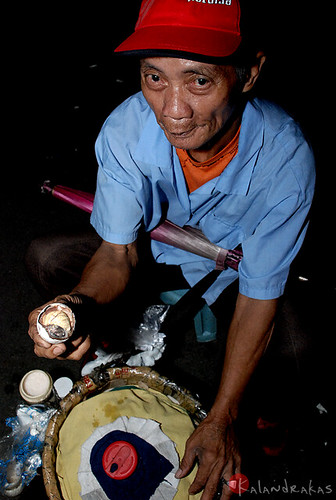
We have covered the basics in numbers and counting. When roaming the streets of the Philippines, you will find street vendors, kantinas (small convenience stores), and you will also bump into a few vendors who carry their products with them as they walk along like this guy:


This photo is upload from kalandrakas photostream

In any case, you'll need to learn how to purchase something...for example: a snack from the kantina, or a bananaque from a street vendor.

Sagmamano ti...... bananaque, Manang? How much is..... the bananaque, Sister?

or

Ania iti presyo na daytoy/dayta? What is the price of this/that?

Read More


Of course we've covered "titles" in our previous lessons so use the appropriate title to the vendor..

Manang = Older Female
Manong = Older Male
Ading = Younger Male or Female

These three titles are the most common that you will be using on the street.

When you are riding a bus or a jeepney or tricycle, you would say:
Mano ti plete?.....How much is the fare?
translate to "Magkano ang bayad?" inTagalog

Kanyam dayta baryan.....Keep the change

translate to....Sa iyo na yan barya in tagalog.

In this lesson, we've covered the "How-to in How Much"
On the street...
1. Sagmamano ti.....? How much is the.......?
2. Ania iti presyo na daytoy/dayta? What is the price of this/that?

In a vehicle....
3. Mano ti plete? How much is the fare?
4. Kanyam dayta baryan. Keep the change (the change is yours)

And don't forget how to say, "Para! Para!".....which means Stop! Stop!...only do so if you are in a jeepney and if the driver does not know where you are actually wanting to get off. Otherwise, they will keep going on their way.

This will get you by for now....

Friday, August 1

Baybayin or Alibata

, , 0


As you may have noticed by now Ilokano uses the standard roman alphabet. So you may be wondering what those symbols up in the clouds of our header image are, or the little icon next to our site address. That is the old Filipino script called baybayin or alibata. The particular ones I put there spell out Ilokano, and simply the symbol for "I" respectively.

Baybayin is a relativly easy script to learn. Each symbol represents either just a vowel or a consonant plus a vowel combination. The base vowel for each consonant pairing is "a" adding a dot above changes it to "e/i" and a dot below changes it to "o/u."

If you are a serious student of language or simply want to get a feel for how things used to be I suggest learning the script. It is rewarding and can benefit you learning. Also, it is a great way to encrypt your notes and messages as few people would actually be able to read them.

For more information check out the sites Baybayin.com as well as Sarisari . Also, click Read more to see a video from Baybayin.com on writing.

Read More


If video doesn't load click HERE.

In the future we will include more on writing, simply as a way to take your Ilokano to a new level.

Until next time. Ditakayon.

Wednesday, July 30

Word Comparison

, 0


Found an interesting web page that compares many words between, English, Tagalog, Ilokano, Cebuano, and several other languages. Go take a look, and bookmark it for future reference.

Link

Weekly Vocabulary

, 0


Filipino hero Jose Rizal spoke over 10 languages, including Ilokano. For the most part he was self taught. The primary technique he used to amass such a knowledge of language was to learn 5 words a day, for a total of 1825 words a year! Considering that most languages use only 1000 words for 90% of all conversation, he would be considered fluent by most standards in less than a year!.

Dr. Rizal is a prime example of the importance of vocabulary. So to get your started on your way to learning I am providing you with a week's worth of words. Keep an eye out for patterns that will help you keep these words straight. Also don't forget about the mnemonics method we discussed earlier, it will help speed up the process. You can memorize these any order, so don't stress over the order I put them in.

Read More

1. Ditóy- "here" close to speaker
2. Ditá- "there" far from speaker, close to listener
3. Idiáy- "there" far from speaker and listener
4. Daytóy- "this" close to speaker
5. Daytá- "that" far from speaker, close to listener
6. Daydiáy- "that" far from speaker and listener
7. Inumén- drink, noun
8. Baláy- house
9. Trabáho- work
10. Sáo- talk
11. Kótse- car
12. Eskuéla- school
13. Kanen- food
14. Kan- eat
15. Ala- get
16. Kuarta- money
17. Gatang- buy
18. Pan- go
19. Umay- come
20. Bigát- morning
21. Malem- afternoon
22. Aldaw- day
23. Rabii- night
24. Naimbag- good
25. Dakkel- big
26. Bassit- small
27. Napintas- beautiful
28. Naguapo- handsome
29. Nagasang- spicy
30. Natayag- tall
31. Banio- bathroom
32. Manok- chicken
33. Libro- book
34. Lalaki- male
35. Babai- female

There you go, a weeks worth of words to memorize. Of course you are not limited to just these 35, especially if there ones you already know. Learning a language is all about how much effort you put into it. Good luck!

Until next time, ditakayon.

Sunday, July 27

Quick Guide to Identifying Words

, 0


Ilokano is one of those nice languages that makes identification of words somewhat easy, especially in writing. If you are following the Barry Farber method of language learning then chances are you have begun to read something in Ilokano. Today's post is just a quick, rough guide to identifying what a word might be when reading.

First are the verbs. The things to look out for to identify verbs are:
  • Ag- : agbasa, agadal
  • Ma- : maturog
  • Mang-: mangala, mangan
  • Um- or -um-: uminom. gumutang
Next are adjectives, many will start with "Na". So if a word starts with "na" and comes before a noun then there is a good chance it may be an adjective.

Last are places. Ilokano is unique in that most verbs can be converted into a place.
  • Pag- -an: pagbasaan, pagadalan
  • Pang- -an: pangalaan, panganan
This is far from a definitive list of identifiers nor is it absolute. There are many words that do not fit nicely into these rules, as well as instances where these rules won't apply. This is simple a quick rough guide for helping you identify certain words.

Tuesday, July 22

Introduction ni Manang Gigi

, 1


Siak ni Gigi, maysa nga naiyanak ken dimmakkel iddiay Pilipinas. Ilokano iti umuna nga naadal ko nga sao. Tagalog ken English iti simmaruno. Maysaak met nga editor ditoy Ilokano Learner Blog.
I am Gigi, one who was born and raised in the Philippines. Ilokano is the first language that I learned. Tagalog and English were next. I am one of the editor here at Ilokano Learner Blog.

Highlight the empty space above to translate the above message.

Hopefully, based on what you have learned so far, you were able to translate the short message I have for you. Along with J Puraw, I will be posting the advanced lessons on learning the Ilokano language. If you have any questions on any of our lessons, don't be shy, feel free to comment or send us a message. That is why we are here, to help others learn Ilokano.