Friday, August 27

Why the Ilokano language?

, 0


Why the Ilokano Language?

As you embark on the journey of learning a new language, there's always that one question that pops up: "Why that language?" And we get it too! On our blog and social media handles, folks often ask us why we chose Ilokano over Tagalog. Well, let us spill the beans on how and why this blog came to be.

Let me paint a picture of me for you! I started my adventure in the lush Northern region of the Philippines, where I spent my first dozen years soaking in the culture. But, then my family and I made the big move to the Lone Star State of Texas! My mother tongue is Ilokano, but I'm fluent in Tagalog and Kankanaey (a dialect within Ilokano). When I entered the land of the free, I picked up English fluently and Spanish on a conversation level. My sis still has her ear tuned to Ilokano and Tagalog, but she's a little shy with speaking. Our baby sister was born and bred in America, so she's yet to learn the lingo of our Filipino roots.


Following our initial trip to the Philippines, my husband experienced his first bout of culture shock. Despite its small size, the country's diverse culture, population, and languages overwhelmed him. Although my husband was enamored with the Philippines, he struggled to comprehend its native tongue. My grandmother, who spoke limited English, attempted to communicate with him, and her efforts touched him deeply. As a result, he committed to mastering her language before our next visit.


Why did we choose Ilokano? The answer is straightforward: to enable my husband to communicate with my grandmother (Lola). While my parents conversed with him in English, it was his interactions with Lola that prompted his interest in learning Ilokano. Moreover, we want our son and sister to appreciate their Filipino roots through language acquisition.

A decade ago, online resources for Ilokano/Ilocano language learning were scarce, making it a challenging task. Consequently, my husband and I established this blog to share and disseminate resources that have proven useful in our own Ilokano language acquisition. Our youngest sister has embraced our lessons and is learning the language through our blog, while we continue to educate our son on the language. Given our family's frequent travel between Texas and the Philippines, it's imperative for all of us to maintain proficiency in Ilokano if we wish to converse with our beloved Lola.

The Philippine education system's recent shift towards utilizing the regional native language in teaching and learning has led to more resources becoming accessible online and in bookstores. As a result, our social media platform has gained an influx of student followers searching for resources.

 Languages serve as a crucial medium of communication, allowing individuals to engage in effective and enjoyable conversations with each other.

Pick a language that tickles your fancy and dive in headfirst! We're currently crushing on Ilokano and have got you covered with all the resources you need over on our blog.

Inton maminsan manen. ( Till Next time Again)

Siak ni Gigi 


This article was selected for inclusion in the Buwan ng Wika campaign of the Educational resource publisher Twinkl

Thursday, May 11

Top 10 Must-Try Ilokano Food

, , , 2


Our next lesson post topic is food. So let's talk about Ilokano food culture for a bit. Filipino's are fond of gatherings around food and if you are going to be around for the parties, you'll need to know what you are eating, right? So here are our top 10 Ilokano dishes.


Top 10 Ilokano dishes


1. Bagnet - The King of all lechons. Bagnet is a slap of Pork belly literally deep fried in its own fat, over and over to crispy perfected meaty chicharron. Then it is cut into manageable bite size pieces before taking its final dip into the boiler oil bath. They are served with spicy vinegar. It is artery clogging awesome!

Photo Courtesy of blissfulguro.com during her Vigan Food Trip.

2. Pinakbet - Veggie Delight of the North. It is a combination of vegetables cooked in bagoong (fish sauce). Bagnet is a perfect addition to this dish but some prefer to put shrimp. I used to wonder why my mom always has bittermelon, eggplant, okra, kabocha squash, and long beans in her garden. I just thought it was the basic Asian garden selection. Later on, I realized those are all the veggies to cook pinakbet! Now I get it!

Photo Courtesy of Kusina Master Recipes


3. Poki-Poki/ Poqui-Poqui - Grilled Eggplant Salad. Much like Tortang Talong except it has eggs and onions. Eggplants are grilled until the skin puff out then the toasty skin is removed. Then the mashed eggplants are pan-fried with scrambled eggs, onions and diced tomatoes. Eat dipped in soy sauce or fish sauce.

Photo Courtesy of blissfulguro.com during her Vigan Food Trip.

4. Dinardaraan - Chocolate Meat Pudding. Oh yum! that sounds good, it has chocolate and meat you say? Well, this delicious meat dish is basically sauteed pork meat cooked pork blood with vinegar added to it. The consistency and color after cooking look like chocolate, hence the name. For the most part, this dish is actually pretty good and no shouldn't have any surprise flavors.

Photo Courtesy of Get Lost to Ilocos

5. Dinakdakan - Ilokano Version of Sisig. Another Pork Goodness! So you boil a head of a pig and harvest everything except the bones from it. That includes the nose, ears, cheeks, and don't forget the brains. Some add pork belly, torched thinly sliced pork skin to the mix. Sometimes thrown into the grill for some crispiness. And sometimes, it's simply marinated in vinegar and calamansi and seasoned with onions, garlic, and salt. Either way, it's a totally awesome dish. Not convince? Well, it's the ultimate beer food. Maybe that will entice you to try. There's also beef and goat dinakdakan.

Photo Courtesy of  overseaspinoycooking.net.


6. Pinapaitan - Bitter but Famous. Pinapaitan stems from the word "Pait," which means bitter. That doesn't sound appetizing at all. Have you heard of Mexican Menudo?  Yup, it's pretty much the same soup dish. The difference is in the seasoning. Pinapaitan is an Ilokano soup dish that is mostly made with cow or goat innards and seasoned in its bile extract. First time trying it, go for the beef pinapaitan before you attempt the goat one unless you like goat meat.

Photo Courtesy of Roy Varagan of MAKAN

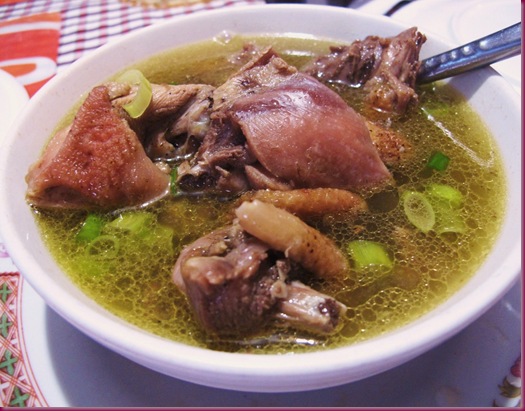
7. Pinikpikan - Igorot Delicacy. This is a chicken soup dish that is best made with "native" chicken or a mountain/wild chicken. The native chicken has long since been domesticated but still, it just tastes different. They have a darker meat and gamier taste. The feathers of the chicken are roasted off over open fire leaving the skin a bit torched but flavorful. It's cook for a long time to tenderize the meat and seasoned with ginger and fish sauce. Some add papaya or pepper leaves to have a bit of veggie option.

Photo Courtesy of Eat Eplore Experience.

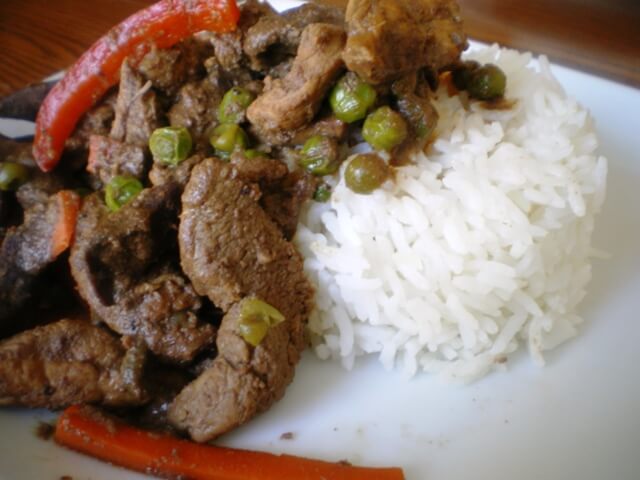
8. Igado - Just another innards dish. Igado is a popular Ilokano dish that mostly made of liver, meat strips and sometimes other organ parts. The name comes from the Spanish word "Higado," which translate to "liver." Hence the part where it has to have liver in the ingredients. It's cooked with bell pepper, peas, and carrots.

Photo Courtesy of PanlasangPinoy.com


9. Dinengdeng - Refreshing Bean Soup dish. This soup is made with variety of green veggies cook with bagoong (fish sauce) and serve with grilled or fried fish like galunggong (roundscad), tilapia or bangus (milkfish)

Photo Courtesy of  Angsarap.net

10. Ilocos Empanada - Not your normal empanada. These empanadas are orange! They mix achuete/annatto powder into their batter flour for flavor and color. The filling consist of shredded papaya or beans sprout with eggs and sometimes longganisa sausage. They are deep fried and dipped in spicy vinegar. Aside from it being deep-fried, it's totally healthy.

Photo Courtesy of Traveler on Foot

So there you go. I hope I made you hungry because I'm feeling hungry now that I'm done with this post.

Mapannak pay agbirok iti lutuik. (I'm going to go look for something to cook)

Inton maminsan manen ( Until Next Time)

SIAK NI GIGI

Thursday, April 13

The Lord's Prayer in Ilokano

, , , , 13


At a young age, I learned the Lords Prayer in Ilokano first then I learned it in English. A common prayer that is a lot of time taken for granted , The Lord's Prayer is not only spiritual but it is a helpful tool in learning the Ilokano language. Many of you already know this prayer in English/Tagalog by heart so it'll be easier for you to translate in your head as you read the Ilokano version.


The Lord's Prayer
"Amami"
(Ilokano Version)

Amami, nga adda sadi langit,
(Um-mah-mi  ngah  ad-dah  sah-dee  lah-ngeet)

Madaydayaw kuma ti Nagan mo.
(Ma-die-die-yao  koo-mah  tee  Na-gun moh)

Umay Kuma ti pagariam.
(Oo-my  koo-ma  tee  pah-gaar-yum)

Maaramid kuma ti pagayatam
(Mah-ah-rah-meed  koo-mah  tee  pah-gah-yah-tum)

Kas sadi langit kasta met ditoy daga.
(Kas  sah-dee  la-ngeet  met  dee-toi  dah-gah)


Itedmo kadakam ita ti kanenmi iti inaldaw.
(Ee-ted-moh kah-dah-kum ee-tah tee kah-nen-mee ee-tee ee-nal-dao)

Ket pakawanennakami kadagiti basol mi,
(Ket  pah-kah-wah-nen-nah-kum-mee  kah-dah-gee-tee  bah-sool  mee)

A kas met panamakawanmi kadagiti naka basol kadakami.
(Ah  kas  met  pah-nah-mah-kah-wun-mee  kah-dah-gee-tee nah-kah  bah-sool  kah-dah-kum-mee)

Ket dinakam iyeg iti pannakasulisog,
(Ket  dee-nah-kum  ee-yeg  ee-tee  pun-nah-ka-soo-lee-soog)

No di ket isalakannakami iti dakes.
(Noh  dee  ket  ee-sah-la-kun-nah-kum-mee ee-tee dah-kes)


Iti pagariam, iti Panakabalinmo, ken iti gloriam
(Ee-tee  pah-gaar-yum,  ee-tee  pah-nah-kah-bah-leen-moh, ken  ee-tee glor-ryam)
nga awan patinggana
(ngah ah-wun pah-teeng-gah-nah
Amen


And this is how it will translate in English, which is different from the English version of the Lord's Prayer.

Our Father who is in heaven,
May your name be honored
May your kingdom be ours
Your will be done,
Here on earth like it is in heaven
Give us now what we will eat everyday
And forgive us of our sins
as we forgive those who sin against us
Do not allow us into temptation
And deliver us from all evil
Because your is the kingdom,
The power and the Glory
that has no limit
Amen

Of course, 
here is the English version most people are familiar with.

Our Father, thou art in heaven,
Hallowed be thy Name. 
Thy kingdom come.
Thy will be done on earth,
As it is in heaven.
Give us this day our daily bread.
And forgive us our trespasses,
As we forgive them that trespass against us.
And lead us not to temptation,
But deliver us from Evil.

For thine is the kingdom,
The power and the glory 
Forever and Ever.
Amen.


Happy Easter Everyone!


Inton maninsan manen! Until Next Time Again.

Happy Learning.

NOTES: These lessons are designed with the English Speakers in mind. The pronunciation is spelled out to emphasize sounds of the English language and alphabet to help the person say it correctly in sounds that they are familiar with. For Tagalog/Filipino readers seeking to utilize our lessons, read the words in your native tongue and do not follow the suggested pronunciation.


Tuesday, April 3

Taste of Ilocano Culture

, , , 0


Image courtesy of MAKAN
For most of us, checking the Facebook news is a part of our daily routine. This morning, as I skimmed through people's post and daily morning rants, I came across a picture of pinapaitan, an Ilokano delicacy, posted by Ilokano Food. I was so stoke! Since I'm about to eat some of that this weekend.

What is Pinapaitan? So you ask. Mananggan describes it best. My simple definition is "Ilokano Menudo" only better.

The article was actually from this website MAKAN. If you are interested in the Ilocano Culture, you simply must start with the food! This site is all about the taste buds of Ilokanos.

While browsing through the different articles, read the comment sections of the site and exercise what you've learned so far from the lessons we've provided. The best way to retain what little Ilokano you've learned is to utilize them. Many of the comments are short and simple. Write down the words you don't know and ask us on our Facebook Page.

Afterwards, for more historical knowledge on Ilokano Food Culture, go check out A Taste of Ilocos Norte.

Don't forget, we post a "Ilokano Phrase of the Day" in our Facebook Page.

Siak ni Gigi, Intayon Agbasa!
(I am Gigi, Let's Read/Learn!)


Saturday, December 24

Paskua

, , , 1


Naragsak a Paskua 
ken
Narang-ay a Baro a Tawen
Kadakayo Amin
(Merry Christmas and Happy New Year to everyone)

Thursday, September 8

And we are back!

, , 1


 Okay, Okay, I know it took as awhile to get going again but, here we are, WE ARE BACK! We are please to see that there are many people who are actually interested in learning the Ilokano Language.

So, let's recap what we've covered with our basics.

1. Greetings and Labels
2. Number Basics
3. Street Basics
4. Simple Prefixes
5. Common Phrases

So what's next?

To start us up gain, here's a little something base on the basics that we've given our so far.

When riding a bus in the Philippines, you have a driver and a conductor. The conductor will assign seating and also give you your ticket fare, they will have hole punches into you ticket to indicate the amount you will be paying base on your destination. Here's a little Ilokano Joke for you.  Try to keep up.

NOTE: Highlight the space under the lines and the English translation will appear.
Daytoy ket naaramid diay unig ti bus:
This happened inside the bus:
Konductor: Daytoy ni ti tiket mo madam.
Conductor: This is your ticket ma'am.
Madam: Manong, mano iti bayadak nga pasahek?
Ma'am: (Older brother), how much do I pay for my fare?
Konductor: Madam, kitaem ken basaem dayta tiket mo
Conductor: Ma'am, look and read your ticket.
Madam: Kasano ngay nga basaek daytoy ket inabut-abutam mettin.
Ma'am: How am I suppose to read this, you punch a lot of holes into it.

NGEK! ( It's like saying OMG! or LMAO but in a more dramatic way)

Now, many of you probably didn't get that joke but it's a start. Many Ilokano jokes are full of sarcasm and also many are deemed offensively perverted to westerners but all in good fun. We will stick with the cleaner jokes, of course.

Thank you to all our viewers and those who are actually looking forward to the new lessons coming up.

Agyaman kami la unay. (We thank you very much)


Saturday, July 19

Food

, 0


A big part of learning Ilokano is learning the culture behind the language. An important part of learning the culture is embracing the food. Nothing will help spark a conversation like eating new foods.

So here are some popular Ilokano foods to look out for, and try at least once. You might even like them.

1. Pinakbet- A cooked vegetable medley with strong flavors. The bitterness really comes out in the Bittermelon as well as the eggplants, peppers, okra, tomatoes and beans. All that accented with ginger and bagoong. The overall dish is cooked until slightly dry. A must try for those who love vegetables.

2. Dinengdeng- Similiar in ingredients to Pinakbet, except soupy. I personally love this when mixed with rice.

3. Pinapaitan- A dish that has some variation, but is guaranteed to have the intestines of some animal. Similiar to Mexican menudo. Often cooked with bile, which is wonderful at adding flavor as well as tenderizing the meat. One of my personal favorites.

4. Tinubong- A desert made from coconut, bamboo, and rice. Cooked inside bamboo stalks this is a great snack. A true specialty of Ilocos.

Future posts will contain more foods, as well as recipes. Not to mention the all important words and phrases needed to order such food.

Until next time. Ditakayon.

Saturday, July 12

You might be Ilokano if....

, 1


Here's a few things that you need to know about Ilokanos. However hilarious you might find them to be, it's the inevitable truth. Enjoy!

1. You might be ilokano if....your favorite food is pinakbet, pinapaitan, and dinardaraan.
2. You might be ilokano if....you eat with one leg propped up with your elbow resting on top of it.
3. You might be ilokano if....your favorite cocktail is basi (sugarcane fermented wine)
4. You might be ilokano if.....you put bagoong (fish sauce) in everything you eat.
5. You might be ilokano if.....you dip you bread in your coffee.
6. You might be ilokano if.....your daily footwear is tsinelas (slippers) becoz shoes are for special events only.
7. You might be ilokano if.....your nick name is "Mulagat"(Wide-Eyed - never miss a thing).
8. You might be ilokano if.....all your kitchenware has your name written in the back with a permanent marker. Note: Same goes with your underwear.
9. You might be ilokano if.....your raise chickens or goats in your backyard for personal consumption
10. You might be ilokano if.....your luggage is full of dried pusit (squid) and kankanin(baked rice goods) from your trip to the Philippines.
11. You might be ilokano if.....the first song you learn as a kid is "Manang Biday"
12. You might be ilokano if.....you refer to someone older as "Manang" or "Manong"
13. You might be ilokano if.....you say "Ay Sus!" over 10 times a day
14. You might be ilokano if.....your grandmother smokes cigar with the lit end in the mouth.
15. You might be ilokano if.....there is a set of giant wooden fork and spoon hanging on your wall
16. You might be ilokano if.....if you read "Bannauag" or "Liwayway" Magazines
17. You might be ilokano if.....if your favorite fish is karing (dried salted fish)
18. You might be ilokano if.....if your favorite snack is kilab-ban! (left overs)
19. You might be ilokano if.....if you eat all fruits with salt and vinegar
20. You might be ilokano if.....if machetes are the only knives you own.

Well, we will stop there...Hope you had a good laugh. Be warn, these are all quiet true. For more of "You might be Ilokano if...." commentaries, click here. Every now and then, taking a break from the intense studying of the Ilokano language, I'll post these cultural facts and commentaries to break the monotany of studying.

Ala ngaruden! Innakon.