Saturday, August 9

How Much?

, , 3


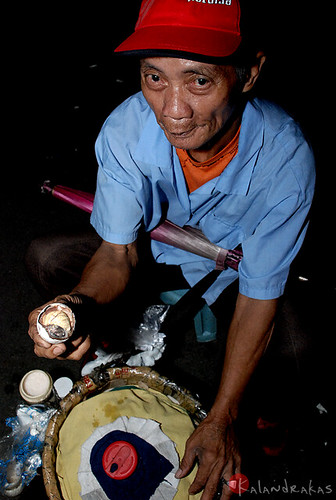
We have covered the basics in numbers and counting. When roaming the streets of the Philippines, you will find street vendors, kantinas (small convenience stores), and you will also bump into a few vendors who carry their products with them as they walk along like this guy:


This photo is upload from kalandrakas photostream

In any case, you'll need to learn how to purchase something...for example: a snack from the kantina, or a bananaque from a street vendor.

Sagmamano ti...... bananaque, Manang? How much is..... the bananaque, Sister?

or

Ania iti presyo na daytoy/dayta? What is the price of this/that?

Read More

Of course we've covered "titles" in our previous lessons so use the appropriate title to the vendor..

Manang = Older Female
Manong = Older Male
Ading = Younger Male or Female

These three titles are the most common that you will be using on the street.

When you are riding a bus or a jeepney or tricycle, you would say:
Mano ti plete?.....How much is the fare?
translate to "Magkano ang bayad?" inTagalog

Kanyam dayta baryan.....Keep the change

translate to....Sa iyo na yan barya in tagalog.

In this lesson, we've covered the "How-to in How Much"
On the street...
1. Sagmamano ti.....? How much is the.......?
2. Ania iti presyo na daytoy/dayta? What is the price of this/that?

In a vehicle....
3. Mano ti plete? How much is the fare?
4. Kanyam dayta baryan. Keep the change (the change is yours)

And don't forget how to say, "Para! Para!".....which means Stop! Stop!...only do so if you are in a jeepney and if the driver does not know where you are actually wanting to get off. Otherwise, they will keep going on their way.

This will get you by for now....

Friday, July 18

Counting part 2 Larger Ilokano Numbers

, 0


Due to the popularity of the last post on numbers and counting I've decided to go ahead and finish showing the Ilokano counting and numbers.

What you need to know first is the basics of numbers. We covered 1-10 in the last lesson, these also act as the prefixes for all future numbers. With the exception of "sanga" which is used instead of "maysa" to denote 1. Next we will cover the suffixes for bigger numbers.


###Ilokano Suffix
1None
10pulo
100gasut
1,000ribo
10,000laksa
1,000,000riwriw


From here it is just a matter of plugging in the correct base word to get the desired numbers. Here are some examples:

123- sangagasut ket duapulo ket tallo
4432- uppat a ribo ket uppat a gasut ket tallopulo ket dua

Notice how the linker "a" is used whenever the base number ends in a consonant. You only have to use this for 4 (uppat), 6 (innem) and 9 (siam).

Here are a couple more for you to try. I'll give you the number, and hide the correct answer. Just highlight next to the number to reveal the correct answer.

387- tallogasut ket walopulo ket pito
21- duapulo ket maysa
42109- uppat a laksa ket duaribo ket sangagasut ket siam
4288- uppat a ribo ket duagasut ket walopulo ket walo

Hopefully you got those right. The next numbers lesson will focus on Spanish numbers for money and time. If you have any questions feel free to leave a comment.

Until next time. Ditakayon.

Related Posts: Numbers and Counting

Thursday, July 17

Numbers and counting

, , 8


Here is a quick lesson on numbers. Don't be surprised to come across Ilokano, Tagalog, Spanish, and English numbers. For general reference Ilokano numbers are used for small amounts, whereas Spanish is used for larger numbers as well as telling time (which we will cover later).

Here is a quick reference chart for you that compares Tagalog, Ilokano, and Spanish.


###IlokanoSpanishTagalog
1maysaunoisa
2duadosdalawa
3tallotrestatlo
4uppatcuatroapat
5limacincolima
6innemseisanim
7pitosietepito
8waloochowalo
9siamnuevesiyam
10sangapulodiezsampu


These few numbers will get you by in most cases where you would use Ilokano numbers. For anything above ten just take the group of ten (sangapulo, duapulo, etc) throw in a "ket" (and) then the next number (maysa, dua, etc).

Here are some examples:
23- duapulo ket tallo
58- limapulo ket walo

I'll cover bigger numbers in a later post. For now just get the basics.

Here is a site a good site that has Spanish numbers, it would be a good idea to learn them as they are more common for bigger numbers. A nice list of Spanish numbers with "Ilokano spelling" can also be found in the back of Dr. Rubino's Ilokano book.

Practice your counting and you will be ready to ask for prices, as well as tell time and have general conversation. Remember there is no shame in using your fingers when you are learning to count. People will still be impressed that you are learning.

Until next time. Ditakayon.