Wednesday, November 1

Holidays with Ilocanos

, , 0


A Parol is a star-shaped ornament that is an iconic Christmas symbol in the Philippines. Some are fancy with lights and some are just made of paper or plastic. It represents the star of Bethlehem which helped guide the Three Kings to the Nativity of Jesus.


The presence of a Parol outside someone's window or porch is a telltale sign of Filipino culture. Although it is only November, it's common to see their Christmas trees and lights already up. In the Philippines, Christmas festivities begin as soon as the "BER" months start. The hundred-day countdown to Christmas Day commences on September 16th, and Filipinos like to celebrate early.
Gathering with loved ones holds a crucial place in Filipino culture, and they need no specific occasion to host a party. Of course, the holiday season provides even more reasons to celebrate. Christmas festivities in the Philippines are not limited to just families; the entire community comes together to celebrate. This year's exceptional circumstances caused by the pandemic may affect the celebrations, but Filipinos will undoubtedly find ways to enjoy each other's company and share their blessings.

To begin a new lesson, it's fitting to focus on the holidays. We've previously published an article on holiday celebrations, which you can read HERE.

HOLIDAY GREETINGS!


Since it is just around the corner, let's start with Thanksgiving.

Happy Thanksgiving - Naragsak/Naimbag nga Panagyaman
                                (Nah-rug-sak / Nah-eem-bug ngah pa-nahg-ya-mahn)

***Tagalog: Maligayang Pasasalamat 


Now for the rest of the holidays, here you go!


Merry Christmas - Naimbag a Paskua
                             (Nah-rug-sak / Nah-eem-bug ah Pas-kwa)

           You (Singular)  Kenka (Ken-yah-yoh)

          You (Plural)     Kendakayo (Ken-duh-kah-yoh) 

                                Kenyayo (ken-yah-yoh)

          Y'all / You all    Kendakayo Amin (ken-duh-kah-yoh Ah-meen)  
 
                                Kenyayo Amin (ken-ya-yo Ah-meen)
            
***Tagalog: Maligayang Pasko


Happy New Year -Naragsak a baro nga tawen
                                (Nah-rug-sak ah ba-ro ngah tah-wen)

                            You (Singular)   Kenka (Ken-yah-yoh)

                     You (Plural)      Kendakayo (Ken-duh-kah-yoh) 

                                            Kenyayo (ken-yah-yoh)

            Y'all / You all    Kendakayo Amin (ken-duh-kah-yoh Ah-meen)  
 
                                   Kenyayo Amin (ken-ya-yo Ah-meen)

***Manigong Bagong Taon or Maligayang Bagong Taon


Here's a list of words that will be helpful along the way:
 

 Here are some phrases that you definitely need to remember:


Ready to rock people's socks off? Check out these mind-blowing lessons from our blog below! Or, if you're a curious cat, take a peek at our older posts for even more goodies. And, if you're not already part of our Facebook family, come join us for some daily laughs and fun!

GREETINGS PART 1

GREETINGS PART 2

COMMON PHRASES

Our apologies for the lack of recent uploads to this page. We will be taking action to rectify this by releasing more content in the near future. Additionally, we plan to revisit and update some of our prior postings in response to the feedback we have received.


Until Next Time,

Siak ni Gigi


NOTES: These lessons are designed with the English Speakers in mind. The pronunciation is spelled out to emphasize sounds of the English language and alphabet to help the person to say it correctly in sounds that they are familiar with. 


For Tagalog/Filipino readers seeking to utilize our lessons, read the words in your native tongue and do not follow the suggested pronunciation.

Friday, August 27

Why the Ilokano language?

, 0


Why the Ilokano Language?

As you embark on the journey of learning a new language, there's always that one question that pops up: "Why that language?" And we get it too! On our blog and social media handles, folks often ask us why we chose Ilokano over Tagalog. Well, let us spill the beans on how and why this blog came to be.

Let me paint a picture of me for you! I started my adventure in the lush Northern region of the Philippines, where I spent my first dozen years soaking in the culture. But, then my family and I made the big move to the Lone Star State of Texas! My mother tongue is Ilokano, but I'm fluent in Tagalog and Kankanaey (a dialect within Ilokano). When I entered the land of the free, I picked up English fluently and Spanish on a conversation level. My sis still has her ear tuned to Ilokano and Tagalog, but she's a little shy with speaking. Our baby sister was born and bred in America, so she's yet to learn the lingo of our Filipino roots.


Following our initial trip to the Philippines, my husband experienced his first bout of culture shock. Despite its small size, the country's diverse culture, population, and languages overwhelmed him. Although my husband was enamored with the Philippines, he struggled to comprehend its native tongue. My grandmother, who spoke limited English, attempted to communicate with him, and her efforts touched him deeply. As a result, he committed to mastering her language before our next visit.


Why did we choose Ilokano? The answer is straightforward: to enable my husband to communicate with my grandmother (Lola). While my parents conversed with him in English, it was his interactions with Lola that prompted his interest in learning Ilokano. Moreover, we want our son and sister to appreciate their Filipino roots through language acquisition.

A decade ago, online resources for Ilokano/Ilocano language learning were scarce, making it a challenging task. Consequently, my husband and I established this blog to share and disseminate resources that have proven useful in our own Ilokano language acquisition. Our youngest sister has embraced our lessons and is learning the language through our blog, while we continue to educate our son on the language. Given our family's frequent travel between Texas and the Philippines, it's imperative for all of us to maintain proficiency in Ilokano if we wish to converse with our beloved Lola.

The Philippine education system's recent shift towards utilizing the regional native language in teaching and learning has led to more resources becoming accessible online and in bookstores. As a result, our social media platform has gained an influx of student followers searching for resources.

 Languages serve as a crucial medium of communication, allowing individuals to engage in effective and enjoyable conversations with each other.

Pick a language that tickles your fancy and dive in headfirst! We're currently crushing on Ilokano and have got you covered with all the resources you need over on our blog.

Inton maminsan manen. ( Till Next time Again)

Siak ni Gigi 


This article was selected for inclusion in the Buwan ng Wika campaign of the Educational resource publisher Twinkl

Thursday, May 18

Let's Eat Part 1: Food Culture

, , 6


Food is an integral part of understanding a culture. The next few lessons are dedicated to eating. We will focus mainly on mealtimes, names, ordering food and other common phrases you should expect to hear in relation to eating.

First, we will start off with a translation exercise. See if you can follow the conversation.


Jacobo: Nangankan?
Mark: Saan pay.
Jacobo: Umayka ditoy, mangan ka pay.

Mark: Ania ti sidain?
Jacobo: Pinakbet, innapoy, ken sisig.
Mark: Kayat ko ti sisig.

Mark: Naimas. Sino ti nagluto?
Jacobo: Kasinsin ko nga ni Demy.
Mark: Naimas ti sidain.

Mark: Nabusugakon.


So how much of that did you understand? Well, check yourself.


Jacobo: Nangankan? Did you eat yet?
Mark: Saan pay. Not yet.
Jacobo: Umayka ditoy, mangan ka pay. Come here and eat.

Mark: Ania ti sidain? What is the side dish?
Jacobo: Pinakbet, innapoy, ken sisig. Pinakbet, Rice, and Sisig
Mark: Kayat ko ti sisig. I want Sisig.

Mark: Naimas. Sino ti nagluto? Yummy. Who cooked?
Jacobo: Kasinsin ko nga ni Demy. My cousin Demy
Mark: Naimas ti sidain.The side dish is yummy

Mark: Nabusugakon.I'm full.

Nangankayon? ( Nah-ngahn-kah-yon?)
Nangankan? (Nah-ngahn-kahn?)


Simply put "Have you eaten?" or as we like to say in Texas, "Have y'all eaten?". 

Filipino culture dictates that it is rude to not offer someone food, so it is customary to ask this question when you have visitors. So if you are the visitor, to avoid an embarrassing situation where food is not prepared ahead of time, it is best to answer that you have already eaten.


Wen, nanganakkon (wen, nah-ngah-nahk-con) 
Yes, I have eaten.

Wen, nangankamin (wen, nah-ngahn-kah-mean) 
Yes, we have eaten.


If it is a sincere question, you will mostly like be asked again, in which case it is okay to accept. In which you can respond with the following:


Saan pay (sah-un pie)  - Not Yet
or
Merienda lang (Mer-ree-yen-duh lung) - Snacks only


And always follow with the proper title:

Apo (elderly)
Uncle/Auntie (if they are old enough to be your auntie/uncle, you call them that)
Manang/manong (someone older)
Ading (someone younger)
Madam/Sir (Politicians, Teachers, businessman)
Lolo/Lola 

And of course, when you are done, don't forget to be thankful.

Agyamanak (ugh-yah-man-knock) - singular

Agyaman kami (ugh-yah-man-kah-mee) - plural

So next time you have to visit someone or meet up with someone, remember this simple visiting etiquette. So next week we will discuss mealtime conversations.

Inton maminsan manen,
Siak ni Gigi


NOTES: These lessons are designed with the English Speakers in mind. The pronunciation is spelled out to emphasize sounds of the English language and alphabet to help the person to say it correctly in sounds that they are familiar with. 


For Tagalog/Filipino readers seeking to utilize our lessons, read the words in your native tongue and do not follow the suggested pronunciation.

Thursday, May 11

Top 10 Must-Try Ilokano Food

, , , 2


Our next lesson post topic is food. So let's talk about Ilokano food culture for a bit. Filipino's are fond of gatherings around food and if you are going to be around for the parties, you'll need to know what you are eating, right? So here are our top 10 Ilokano dishes.


Top 10 Ilokano dishes


1. Bagnet - The King of all lechons. Bagnet is a slap of Pork belly literally deep fried in its own fat, over and over to crispy perfected meaty chicharron. Then it is cut into manageable bite size pieces before taking its final dip into the boiler oil bath. They are served with spicy vinegar. It is artery clogging awesome!

Photo Courtesy of blissfulguro.com during her Vigan Food Trip.

2. Pinakbet - Veggie Delight of the North. It is a combination of vegetables cooked in bagoong (fish sauce). Bagnet is a perfect addition to this dish but some prefer to put shrimp. I used to wonder why my mom always has bittermelon, eggplant, okra, kabocha squash, and long beans in her garden. I just thought it was the basic Asian garden selection. Later on, I realized those are all the veggies to cook pinakbet! Now I get it!

Photo Courtesy of Kusina Master Recipes


3. Poki-Poki/ Poqui-Poqui - Grilled Eggplant Salad. Much like Tortang Talong except it has eggs and onions. Eggplants are grilled until the skin puff out then the toasty skin is removed. Then the mashed eggplants are pan-fried with scrambled eggs, onions and diced tomatoes. Eat dipped in soy sauce or fish sauce.

Photo Courtesy of blissfulguro.com during her Vigan Food Trip.

4. Dinardaraan - Chocolate Meat Pudding. Oh yum! that sounds good, it has chocolate and meat you say? Well, this delicious meat dish is basically sauteed pork meat cooked pork blood with vinegar added to it. The consistency and color after cooking look like chocolate, hence the name. For the most part, this dish is actually pretty good and no shouldn't have any surprise flavors.

Photo Courtesy of Get Lost to Ilocos

5. Dinakdakan - Ilokano Version of Sisig. Another Pork Goodness! So you boil a head of a pig and harvest everything except the bones from it. That includes the nose, ears, cheeks, and don't forget the brains. Some add pork belly, torched thinly sliced pork skin to the mix. Sometimes thrown into the grill for some crispiness. And sometimes, it's simply marinated in vinegar and calamansi and seasoned with onions, garlic, and salt. Either way, it's a totally awesome dish. Not convince? Well, it's the ultimate beer food. Maybe that will entice you to try. There's also beef and goat dinakdakan.

Photo Courtesy of  overseaspinoycooking.net.


6. Pinapaitan - Bitter but Famous. Pinapaitan stems from the word "Pait," which means bitter. That doesn't sound appetizing at all. Have you heard of Mexican Menudo?  Yup, it's pretty much the same soup dish. The difference is in the seasoning. Pinapaitan is an Ilokano soup dish that is mostly made with cow or goat innards and seasoned in its bile extract. First time trying it, go for the beef pinapaitan before you attempt the goat one unless you like goat meat.

Photo Courtesy of Roy Varagan of MAKAN

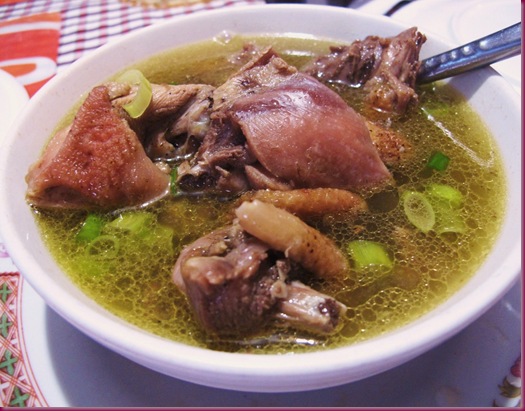
7. Pinikpikan - Igorot Delicacy. This is a chicken soup dish that is best made with "native" chicken or a mountain/wild chicken. The native chicken has long since been domesticated but still, it just tastes different. They have a darker meat and gamier taste. The feathers of the chicken are roasted off over open fire leaving the skin a bit torched but flavorful. It's cook for a long time to tenderize the meat and seasoned with ginger and fish sauce. Some add papaya or pepper leaves to have a bit of veggie option.

Photo Courtesy of Eat Eplore Experience.

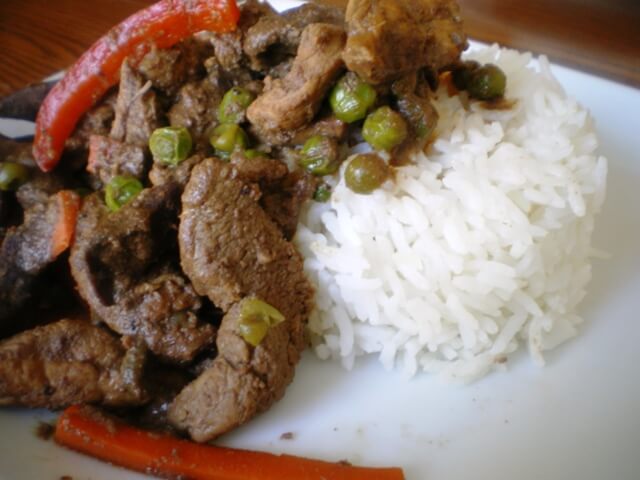
8. Igado - Just another innards dish. Igado is a popular Ilokano dish that mostly made of liver, meat strips and sometimes other organ parts. The name comes from the Spanish word "Higado," which translate to "liver." Hence the part where it has to have liver in the ingredients. It's cooked with bell pepper, peas, and carrots.

Photo Courtesy of PanlasangPinoy.com


9. Dinengdeng - Refreshing Bean Soup dish. This soup is made with variety of green veggies cook with bagoong (fish sauce) and serve with grilled or fried fish like galunggong (roundscad), tilapia or bangus (milkfish)

Photo Courtesy of  Angsarap.net

10. Ilocos Empanada - Not your normal empanada. These empanadas are orange! They mix achuete/annatto powder into their batter flour for flavor and color. The filling consist of shredded papaya or beans sprout with eggs and sometimes longganisa sausage. They are deep fried and dipped in spicy vinegar. Aside from it being deep-fried, it's totally healthy.

Photo Courtesy of Traveler on Foot

So there you go. I hope I made you hungry because I'm feeling hungry now that I'm done with this post.

Mapannak pay agbirok iti lutuik. (I'm going to go look for something to cook)

Inton maminsan manen ( Until Next Time)

SIAK NI GIGI

Thursday, May 4

Ilokano Weather Part 2: How to say COLD in Ilokano

, , , , , 1


COLD! COLDER! COLDEST!


 I think the chance for cold weather in my area is pretty much gone. Last week, our topic was all about the HOTNESS. Summer is approaching after all. And in the Philippines, it's hot most of the time. But there are occasions when you experience cold. 

So for this week's lesson, we are talking about COLD weather and feeling cold in general. I'll leave this vocabulary chart up here for reference. The concept is to use different words in the sentences below. 

Basic Vocabulary Chart

WEATHER TALK VOCABULARY
EnglishTagalogIlokano/IlocanoPronounce like this
HotMainitNapudot, NabaraNah-poo-doot, nah-bah-rah
ColdMalamigNalamek/NalamiisNah-lam-ehk/Nah-lam-mi-is
WetBasaBasaBah-sah
DryTuyoRagangirangRah-gah-ngee-rung
Humid/humidityPagkabasaNasalimuotNah-sah-lee-moo-ot
RainUlanTudotoo-do
SnowNiebeNiebeNee -e-be
IceYeloYeloYe-loh
StormBagyoBagioBug-yo


Tell me how COLD it is...


Lamek = COLD

Nalamek - It's cold
Nalamameken - It's already cold
Naglamek - It's very cold
Nalamlamek - It's colder (use for comparison)
Lumamek - It's going to become cold
Limamek - It became cold

Another word for Cold?

Nalamiis is another word for COLD.

Nalamiis - It's cold
Nalamiisen- It's already cold
Naglamiis- It's very cold
Nalamlamiis - It's colder (use for comparison)
Lumamiis- It's going to become cold
Limamiis - It became cold


Talking about the Weather

There is the translation following the English script and there is what English speaker would call the "backward way." Haha, well, it's actually called the reverse translation. English grammar is different from other languages.

The snow is cold ( rain = tudo, ice = yelo, food = makan)

Ti niebe ket nalamek (Tee nee-ye-beh ket nah-lahm-ehk)
Ti niebe ket nalamiis (Tee nee-ye-beh ket nah-lahm-mi-is)

The more common way to say it...

Nalamek iti niebe (Nah-lahm-ehk ee-tee nee-ye-beh)
Nalamiis iti niebe (Nah-lahm-mi-is ee-tee nee-ye-beh)
* It literally translates to ..... Cold is the snow. The verb or adjective comes before the noun.

Then there are descriptive nouns

Nalamek nga niebe (Nah-lahm-ehk tee nee-ye-beh)
Nalamiis nga niebe (Nah-lahm-mi-is tee nee-ye-beh)
*This translate to....Cold snow. When you have an adjective before a noun, you add NGA in between the words in Ilokano.

So for our lessons, we will mostly use reverse translation.

It's cold right now 

Nalamek tatta  (Nah-lahm-ehk tat-tah)
Nalamiis tatta (Nah-lahm-mi-is tat-tah)


It's already cold 

Nalameken (Nah-lahm-eh-ken)
Nalamiisen (Nah-lahm-mi-is-sen)


It's very cold today 

Naglamek tatta nga aldaw (Nug-lahm-ehk tat-tah ngah al-dao)
Naglamiis tatta nga aldaw (Nug-lahm-mi-is tat-tah ngah al-dao)
* When you want to emphasize an adjective, you use NAG instead of  NA before the adjective word. 


It's colder today

Nalamlamek tatta nga aldaw (nah-lahm-lahm-ehk tat-tah ngah al-dao)
Nalamiis tatta nga aldaw (nah-lahm-lahm-mi-is tat-tah ngah al-dao)


Wait for the climate to get cold

Urayem nga lumamek iti tiempo (Ooh-rah-yem ngah loo-mum-ehk ee-tee tee-yem-po)
Urayem nga lumamiis iti tiempo (Ooh-rah-yem ngah loo-mum-mi-is ee-tee tee-yem-po)


The climate became cold

Limamek iti tiempo ( Lee-mum-ehk ee-tee tee-yem-po)
Limamiis iti tiempo ( Lee-mum-mi-is ee-tee tee-yem-po)


I'm  cold/I'm very cold

Nalamekak/Naglamekak (Nah-lahm-ehk-ahk / Nug-lahm-ehk-ahk)
Nahlamiisak/Naglamiisak (Nah-lahm-mi-is-ahk /  Nug-lahm-mi-is-ahk)


You're cold/You're very cold 

Nalamek ka / Naglamek ka ((Nah-lahm-ehk-ka / Nug-lahm-ehk-ka)
Nalamiis ka/Naglamiis ka (Nah-lahm-mi-is ka /  Nug-lahm-mi-is ka)


I'm feeling cold 

Naglamek iti riknak - (Nug-lahm-ehk-ahk ee-tee reek-nak)
Naglamiis iti riknak - (Nug-lahm-mi-is-ahk ee-tee reek-nak)

Or you can say.....

Malamlamekak (Mah-lahm-lahm-ehk-ahk)
Malamiisanak ( Mah-poo-doo-tan-ack)


I'm going to cool off /cool down

Mapannak agpalamek - (Mah-pun-nak ugh-pah-lahm-ehk)
Mapannak agpalamiis - ( Mah-pun-nak ugh-pah-lahm-mi-is)


Nalamek and Nalamiis. If you get these two words mix up, it's okay. They literally mean the same thing. You can use them whether you're talking about the weather or how you are feeling.


COLD FOOD

The Halo-Halo is cold.
Ti Halo-halo ket nalamek/nalamiis.
*English grammar translation.

Cold is the Halo-Halo.
Nalamek/Nalamiis ti Halo-halo
*Reverse Translation. 

You will hear it both ways when the sentence format is:

The (Noun) is (adjective).

When you have an adjective before a noun, you add NGA in between the words in Ilokano

Nalamek/Nalamiis nga Halo-halo (Cold Halo-Halo)
Nalamek/Nalamiis nga Danum (Cold Water)
Nalamek/Nalamiis nga serbesa (Cold Beer)


Intayon agpalamiis. Inton Maninsan Manen!

(Let's go cool off. Until Next Time Again!)


Siak ni Gigi


NOTES: These lessons are designed with the English Speakers in mind. The pronunciation is spelled out to emphasize sounds of the English language and alphabet to help the person to say it correctly in sounds that they are familiar with. 

For Tagalog/Filipino readers seeking to utilize our lessons, read the words in your native tongue and do not follow the suggested pronunciation.

Thursday, April 27

Ilokano Weather Part 1: How to say HOT in Ilokano

, , , , 0


HOT! HOT! HOT!


I don't know about you but it is HOT in this part of the woods. This West Texas heat is no joke! So for this week's lesson, we are talking about the weather, HOT weather, that is.

So, How's the weather is your area? Hope it's not as scorching hot as where I am. Outside is reaching the three-digit in Fahrenheit temperature and it's not even noon yet.

So let's start with some basic vocabulary:


WEATHER TALK VOCABULARY
EnglishTagalogIlokano/IlocanoPronounce like this
HotMainitNapudot, NabaraNah-poo-doot, nah-bah-rah
ColdMalamigNalam-ekNah-lam-ek
WetBasaBasaBah-sah
DryTuyoRagangirangRah-gah-ngee-rung
Humid/humidityPagkabasaNasalimuotNah-sah-lee-moo-ot
RainUlanTudotoo-do
SnowNiebeNiebeNee -e-be
IceYeloYeloYe-loh
StormBagyoBagioBug-yo


Tell me how hot it is...

When it comes to the weather...Pudot = Heat (Noun)  and Napudot = Hot (Adjective).

Napudot - It's hot
Napuduten- It's already hot 
Nagpudot- It's very hot
Napudpudot - It's hotter (use for comparison)
Pummudot- It's going to become hot
Pimmudot - It became hot


It's hot right now - Napudot tatta  (Nah-poo-doot tat-tah)

It's already hot - Napuduten  (Nah-poo-doot-ten)

It's very hot today - Nagpudot tatta nga aldaw (Nug-poo-doot tat-tah ngah al-dao)
* When you want to emphasize an adjective, you use "NAG" instead of (NA) before the adjective word. 

It's hotter today- Napudpudot tatta nga aldaw (nah-pood-poo-doot tat-tah ngah al-dao)

Wait for the climate to get hot
Urayem nga pummudot iti tiempo (Ooh-rah-yem ngah poo-moo-doot ee-tee tee-yem-po)

The climate became hot
Pimmudoten iti tiempo ( Peem-moo-doot-ten ee-tee tee-yem-po)


How do you feel?


Nabara refers more to body temperature. It's use for describing how you feel  when your body is feeling the heat or the head is in your body.


Nabara - It's hot
Nabaran - It's already hot
Nagbara - It's very hot
Nabarbara - It's hotter
Bumara - It's going to get hotter
Bumarbara - It's in the process of getting hotter
Bimara - It got hotter


My head is hot - Nabara daytoy ulok (Nah-ba-ra die-toy oo-look)

My head is very hot - Nagbara daytoy ulok(Nug-bah-rah die-toy oo-look)

I'm hot/I'm very hot - Nabaraak/Nagbaraak (Nah-bah-rah-ack/ Nug-bah-rah-ack)
You're hot/You're very hot - Nabaraka/Nagbaraka(Nah-bah-rah-kah / Nug-bah-rah-kah)
*This word is use more often when you physically feel hot. For example, you are running a fever.

I'm hot/I'm feeling hot - Mapudutanak ( Mah-poo-doo-tan-ack) 
* This word describes a state of being hot. For example, you are directly under the sun or you are feeling the heat from a heater.

My head is hotter now - Nabarbara daytoy ulok tatta (Nah-bar-bar-ra die-toy oo-look tat-tah)

I feel like it's getting hotter - Kasla bumarbara iti riknak (Kas-lah boo-mar-bar-ra ee-tee reek-knock)

Yes, I really feel hotter - Wen, Bimmara nga talaga iti riknak ( Wen Beem-mah-rah ngah tah-la-ga ee-tee reek-knock)

Napudot or Nabara. If you get these two words mix up, it's okay. They still mean the same thing and it's acceptable to use one or the other. Don't sweat it!


Speaking of sweat, outside my house is  HOT AND HUMID! 

Summer time in West Texas is fairly dry but today it's not. We've gotten more rain this summer so it's more humid than normal. In other parts of Texas, like Houston, the humidity level is high most of the time. I prefer the dry heat because it is easier for me to cool down. Just stay inside!


Nasalimuot - It's humid
Nasalimuoten - It's already humid
Nagsalimuot - It's very humid
Nasalsalimuot - It's more humid
Sumalimutot- It's going to be more humid
Sumalsalimuot - It's getting more humid
Simalimuot- It got more humid

It is humid - Nasalimuot (Nah-sah-lee-moo-ot)

It is very humid - Nagsalimuot (Nug-sah-lee-moo-ot)
* This is the word I grew up using.


Here are some words that are use to describe humid:

Nadam-eg  ( Na-dum-egg)

Naagneb (Nah-ugh-neb)

Nalnaab (Nahl-nah-ab)


But when your tongue is burning and you're referring to food:

Gassang=Hot/Spicy

Nagasang (nah-gah-sung) - It's hot/spicy

Naggasang (nagh-gah-sung) - It's very hot/spicy

Nagasgasang (nah-gus-gah-sung) - It's  hotter/spicier

Permi ti gasang na! (Per-mee tee gah-sung nah!) - It's Super hot!


So innak pay agpalammiis. Inton Maninsan Manen!

(So I'm going to go cool off. Until Next Time Again!)

And next week, we will learn how to COOL off in Ilokano.

Siak ni Gigi


NOTES: These lessons are designed with the English Speakers in mind. The pronunciation is spelled out to emphasize sounds of the English language and alphabet to help the person to say it correctly in sounds that they are familiar with. 

For Tagalog/Filipino readers seeking to utilize our lessons, read the words in your native tongue and do not follow the suggested pronunciation.

Thursday, April 20

Greeting in Ilokano Basics Part 2

, , , 0


Mastering basic greetings is an essential first step in learning Ilokano or any language. A simple "hello" can go a long way in eliciting a smile from someone.

We provided a succinct lesson on pronunciation and enunciation, featuring common greeting words, within a previous post. 

For a quick revision, please refer to Greetings Part 1.

Revisit:


Now we are going to add to this: Part 2


Do you want to tell someone hello or ask how they are doing?

Kumusta/Musta - Hello/Hi/How are you?

Kasano ngay ti aldaw mo / yo? Or Kumusta ti aldaw mo / yo? - How is your day?

Kasano ngay ti riknam / yo ? or Kumusta ti riknam/ yo ? - How are you feeling?


When leaving or trying to leave a conversation

 Apannakon / kamin (Up-pahn-nak-koon / Kah-meen)  : I am going leaving now / We

Umunaakkon / pay (oo-moo-nah-ak koon / pie) : I'm going first then ( basically means, "I'm                 leaving/goodbye) in a polite way

Sige ngarud (See-geh ngah-rood): Okay then. (Short way to say you're done talking as you leave to go. It's an informal       way goodbye without being rude)

Inton Maminsan manen (in-toon Mah-meen-sun mah-nen): Til next time

Ngarud/en (ngah-rood/den) - Then (added to the end of a phrase to emphasize the verb) 
  
            For Example: Apannak ngaruden (up-pun-nak nga-rood-den) - I'm going then


Baldo is on his way into town when he bumps into his neighbor Dodoy.

Dodoy: Kumusta ka?
             Hi. How are you?
Baldo:  Mayat met latta, kumusta ka ngay met?
            I'm still good, how are you also?
Dodoy: Mayat met
            Good also
Baldo:  Kasano ngay ti aldaw mo?
            How is your day? ( Literally translates as "How is the day of yours")
Dodoy: Ay ket naimbag ti aldaw ko tatta, sika ngay?
            (Oh well good is my day right now, and you?) Oh well, my day is good right now, and you?
Baldo:  Madi ti riknam tatta nga aldaw.
            (Literal translation: Not good, my feeling today) I'm not feeling well today
Dodoy: Apay? Kasano ngay ti riknam?
            Why? How are you feeling?
Baldo:  Kasla agsakitak sa met
            It's like I'm I may be sick
Dodoy: Ket apanka agpadoktor a ngarud
            And go see a doctor then 
Baldo:  Wen apanak ngarud agpdoktor. Apannak ngaruden, umunakkon.
            Yes, I'll go see the doctor. I am going then, Goodbye.
Dodoy: Wen, sige ngarud. Inton maminsan manen.
            Yes, okay then. Til next time again.

Greeting someone during different times of the day.

    Naimbag nga aldaw (Nah-eem-bug ngah Ahl-dao) - Good Day 

    Naimbag a bigat (Nah-eem-bug ah bee-gut) - Good Morning

    Naimbag a malem (Nah-eem-bug ah mah-lem) - Good Afternoon

    Naimbag a rabii (Nah-eem-bug ah rah-bee-ee) - Good Night/Evening


So after greeting his neighbor, Baldo went into town to see the doctor.

Baldo:   Naimbag nga malim yo doktor
             Good afternoon Doctor
Doktor: Naimbag nga malim mo met Baldo.
             Good afternoon to you also Baldo
Baldo:   Wen doktor, addaak. Umayak agpacheck-up.
              Yes, Doctor, I am here. I came to get a check-up.
Doktor: Apay adda ka met, kumusta ni riknam?
             Why are you here? How are you feeling?
Baldo:   Madi ti riknam, kasla agtrangkaso ak sa.
             I'm feeling not so good. I feel like I have the flu.
Doktor: Umayka ditoy. Agtugaw ka pay ta kitaik no inya ti sakit mo.
            Come here. Just have a seat and I'll look to see what your sickness is.


Baldo found out that he was only coming down with a cold. The doctor gave him a prescription and sent him on his way.

Baldo: Ay sus! agsakitak manen!
cccccc What the heck! I'm sick again!

Lesson Vocabulary:

Sika/Mo- You/your
Siak/Ko - Me/my
Mayat- good
Rikna-feeling
sakit/agsakit - sick/feeling sick
Trangkaso - flu
Madi- not
Met- also
Manen-again
Wen-yes
Tatta - right now
Adda - there is
Umay/Umayyak - come/I'm coming
Kita/kitaik - look/I look
Tugaw/agtugaw - seat/to have a seat or sit down

Were you able to comprehend the story to a significant extent based on recognizing the words and phrases used?

For some of you, the content may seem overwhelming. Take as much time as you need to internalize the simple phrases, and practice saying them out loud to aid retention.

We'll be posting these phrases daily on our Facebook page. Therefore, kindly ensure to subscribe and follow us on Facebook.

Inton maninsan manen! Until Next Time Again.

Happy Learning.

NOTE: These Ilokano language lessons are tailored to English speakers, and the pronunciation is spelled out accordingly to highlight the sounds of the English language and alphabet. For Tagalog/Filipino readers utilizing our lessons, kindly disregard the suggested pronunciation and read the words in your native language.

Thursday, April 13

The Lord's Prayer in Ilokano

, , , , 13


At a young age, I learned the Lords Prayer in Ilokano first then I learned it in English. A common prayer that is a lot of time taken for granted , The Lord's Prayer is not only spiritual but it is a helpful tool in learning the Ilokano language. Many of you already know this prayer in English/Tagalog by heart so it'll be easier for you to translate in your head as you read the Ilokano version.


The Lord's Prayer
"Amami"
(Ilokano Version)

Amami, nga adda sadi langit,
(Um-mah-mi  ngah  ad-dah  sah-dee  lah-ngeet)

Madaydayaw kuma ti Nagan mo.
(Ma-die-die-yao  koo-mah  tee  Na-gun moh)

Umay Kuma ti pagariam.
(Oo-my  koo-ma  tee  pah-gaar-yum)

Maaramid kuma ti pagayatam
(Mah-ah-rah-meed  koo-mah  tee  pah-gah-yah-tum)

Kas sadi langit kasta met ditoy daga.
(Kas  sah-dee  la-ngeet  met  dee-toi  dah-gah)


Itedmo kadakam ita ti kanenmi iti inaldaw.
(Ee-ted-moh kah-dah-kum ee-tah tee kah-nen-mee ee-tee ee-nal-dao)

Ket pakawanennakami kadagiti basol mi,
(Ket  pah-kah-wah-nen-nah-kum-mee  kah-dah-gee-tee  bah-sool  mee)

A kas met panamakawanmi kadagiti naka basol kadakami.
(Ah  kas  met  pah-nah-mah-kah-wun-mee  kah-dah-gee-tee nah-kah  bah-sool  kah-dah-kum-mee)

Ket dinakam iyeg iti pannakasulisog,
(Ket  dee-nah-kum  ee-yeg  ee-tee  pun-nah-ka-soo-lee-soog)

No di ket isalakannakami iti dakes.
(Noh  dee  ket  ee-sah-la-kun-nah-kum-mee ee-tee dah-kes)


Iti pagariam, iti Panakabalinmo, ken iti gloriam
(Ee-tee  pah-gaar-yum,  ee-tee  pah-nah-kah-bah-leen-moh, ken  ee-tee glor-ryam)
nga awan patinggana
(ngah ah-wun pah-teeng-gah-nah
Amen


And this is how it will translate in English, which is different from the English version of the Lord's Prayer.

Our Father who is in heaven,
May your name be honored
May your kingdom be ours
Your will be done,
Here on earth like it is in heaven
Give us now what we will eat everyday
And forgive us of our sins
as we forgive those who sin against us
Do not allow us into temptation
And deliver us from all evil
Because your is the kingdom,
The power and the Glory
that has no limit
Amen

Of course, 
here is the English version most people are familiar with.

Our Father, thou art in heaven,
Hallowed be thy Name. 
Thy kingdom come.
Thy will be done on earth,
As it is in heaven.
Give us this day our daily bread.
And forgive us our trespasses,
As we forgive them that trespass against us.
And lead us not to temptation,
But deliver us from Evil.

For thine is the kingdom,
The power and the glory 
Forever and Ever.
Amen.


Happy Easter Everyone!


Inton maninsan manen! Until Next Time Again.

Happy Learning.

NOTES: These lessons are designed with the English Speakers in mind. The pronunciation is spelled out to emphasize sounds of the English language and alphabet to help the person say it correctly in sounds that they are familiar with. For Tagalog/Filipino readers seeking to utilize our lessons, read the words in your native tongue and do not follow the suggested pronunciation.